How to Handle a Dead Battery on Your Vehicle:
Table of Contents
How to Handle a Dead Battery on Your Vehicle
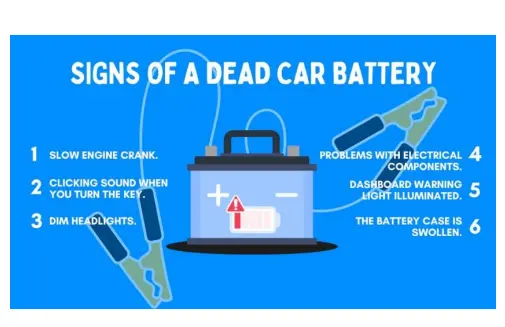
If your vehicle has a dead battery, here’s how you can handle the situation safely and effectively:
Signs Your Battery Might Be Dead:
∙ Engine won’t start or cranks slowly
∙ Dashboard lights are dim or flickering
∙ Clicking sound when turning the key
∙ Electrical features (radio, windows, lights) not working
What to Do if You’re Battery Is Dead:
1. Stay Safe First
∙ Park in a safe, flat location away from traffic.
∙ Turn off all electronics (lights, radio, A/C).
∙ Engage the parking brake and open the hood.
2. Use Jumper Cables (if available)
You’ll need another vehicle with a working battery.
Steps:
1. Position both vehicles: Nose-to-nose, both turned off.
2. Connect cables in order:
o Red to dead battery positive (+)
o Red to good battery positive (+)
o Black to good battery negative (–)
o Black to an unpainted metal surface on the dead car (not the battery) 3. Start the working car and let it run 2–3 minutes.
4. Start the dead vehicle. If it starts, let it run for at least 15–30 minutes to recharge. 5. Remove cables in reverse order.
3. No Jumper Cables? Try a Jump Box
∙ Portable jump starters (jump boxes) work without another car.
∙ Connect it the same way you would jumper cables.
4. Still Not Starting?
∙ Check for corrosion on battery terminals (white or greenish buildup). ∙ Try tightening or cleaning the connections.
∙ If still dead, your battery may be too discharged or faulty. Time to replace or call for help.
Long-Term Fix:
If your battery keeps dying:
∙ Have the battery tested at an auto parts store or mechanic.
∙ Check alternator performance (it charges the battery).
∙ Consider replacement if the battery is over 3–5 years old.
When to Call for Help:
∙ No access to jumper cables or jump box
∙ Car still won’t start after jumping
∙ Battery is leaking or swollen (this is dangerous—do NOT attempt to jump)