

What to Do If Your Car's Battery Is Dead: A Complete Guide
What to Do If Your Car's Battery Is Dead
1. Recognize the Signs of a Dead or Weak Car Battery
Before deciding what to do, it helps to recognize the symptoms of a weak or completely dead battery. In many cases, your vehicle gives you warning signs before the battery stops working altogether.
Some of the most common symptoms include:
- Engine won't start: You turn the key or press the start button, but the engine does not crank.
- Clicking sounds: You hear rapid clicking when attempting to start the vehicle.
- Dim headlights: Your headlights or interior lights appear weaker than usual.
- Slow engine cranking: The engine takes longer than normal to turn over.
- Electrical accessories stop working: Power windows, dashboard displays, locks, or other electrical features may behave unusually.
- Battery warning light: A battery-shaped warning light may appear on the dashboard, indicating a possible charging-system problem.
These symptoms can point to a weak battery, but they are not always proof that the battery itself has failed. A professional diagnosis can help identify the actual cause.
2. Check Your Vehicle Before Trying to Start It Again
If your car won't start, avoid repeatedly turning the ignition or pressing the start button. Repeated attempts can drain an already weak battery further.
Instead, take a moment to check a few things.
First, make sure the vehicle is in Park if it has an automatic transmission. For a manual transmission, follow the starting instructions in the owner's manual.
Next, check whether the headlights, interior lights, and dashboard display are working. If everything is completely unresponsive, the battery may have little or no remaining charge.
You can also look at the battery terminals for visible corrosion or loose connections, but do not touch a battery that appears cracked, swollen, leaking, frozen, or damaged.
If you notice a strong rotten-egg smell, step away from the vehicle and seek professional assistance. These conditions can make jump-starting unsafe.
3. Try a Jump-Start if It Is Safe to Do So
One of the most common ways to deal with a discharged car battery is jump-starting.
A jump-start uses power from another vehicle's battery or a portable jump starter to provide enough electricity for your engine to start.
However, jump-starting must be done correctly. Incorrect connections can damage sensitive vehicle electronics or cause injury.
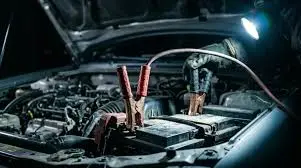
How to Jump-Start a Car With Jumper Cables
If your battery and vehicle are safe to jump-start, follow these general precautions:
- Read your owner's manual: Check the manufacturer's instructions and locate the designated jump-starting terminals. Some vehicles have special connection points rather than easily accessible battery terminals.
- Position the vehicles safely: Park the vehicles close enough for the cables to reach without allowing them to touch.
- Turn everything off: Switch off both vehicles and turn off lights, air conditioning, and other electrical accessories before connecting the cables.
- Connect the positive cable: Attach the red clamp to the positive (+) terminal or designated positive jump point on each vehicle, following the manufacturer's instructions.
- Connect the negative cable: Attach the black clamp to the working vehicle's negative (-) terminal and connect the other end to the recommended grounding point on the vehicle with the dead battery.
- Start the working vehicle: Follow the vehicle manufacturers' instructions for the appropriate starting sequence.
- Attempt to start the vehicle: Once the connections have been checked, try starting the vehicle with the weak battery.
- Disconnect carefully: If the vehicle starts, remove the cables in the reverse order specified in the owner's manual. Keep the clamps from touching each other or other metal surfaces.
Important safety reminder: Never attempt to jump-start a cracked, leaking, swollen, or frozen battery. Keep flames, cigarettes, and sparks away from the battery. Do not use a higher-voltage power source than the vehicle's specified system. If you are unsure about the procedure, contact roadside assistance or a qualified technician.
Modern vehicles can have different jump-starting requirements, so the owner's manual should always take priority over generic instructions.
4. Consider Using a Portable Jump Starter
A portable jump starter is another useful option when your car battery loses its charge.
Unlike traditional jumper cables, a portable jump starter does not require another vehicle. It is a compact device that supplies temporary power to help start your engine.
Many drivers keep one in their vehicle because it can be useful during unexpected battery problems.
Before using one, check that it is compatible with your vehicle's battery voltage and engine requirements. Follow the device instructions and your owner's manual carefully.
A portable jump starter is helpful in an emergency, but it does not repair a damaged battery or fix an underlying charging-system problem.
5. What If Your Car Still Won't Start After a Jump-Start?
A successful jump-start can get your vehicle running temporarily, but what happens if the engine refuses to start even after following the correct procedure?
There may be another issue beyond a discharged battery.
Here are a few possible causes:
A Completely Worn-Out Battery
Car batteries lose their ability to hold a charge as they age. If your battery is no longer capable of storing enough power, a jump-start may not provide a lasting solution.
A Faulty Alternator
The alternator helps recharge the battery while the engine is running. If it is not working properly, the battery may repeatedly lose its charge.
One warning sign is a vehicle that starts with a jump but soon develops electrical problems or stops running.
A Faulty Starter Motor
The starter motor is responsible for turning the engine over when you start the vehicle. If you hear a single click but the engine does not crank, the starter or its electrical circuit may need attention.
Corroded or Loose Battery Connections
Corrosion or loose connections can interfere with the flow of electricity between the battery and the vehicle. Even a battery with sufficient charge may struggle to start the engine if its connections are poor.
If the vehicle continues to have starting problems, have the battery, starter, alternator, and electrical connections tested instead of repeatedly attempting to jump-start it.
6. Know When Your Car Battery Needs Replacement
Sometimes a jump-start is enough to get your vehicle moving again. However, an old or damaged battery may need to be replaced.
Most conventional car batteries last approximately three to five years, although their lifespan depends on driving habits, climate, maintenance, and vehicle electrical demands.
Consider having your battery tested if:
- It repeatedly needs jump-starts.
- The engine struggles to start even after charging.
- The battery is several years old.
- The battery case appears swollen or damaged.
- Electrical features behave inconsistently.
- The battery cannot maintain a proper charge.
When purchasing a replacement, make sure the new battery matches your vehicle's required size, terminal arrangement, specifications, and performance requirements. Some modern vehicles also require battery registration or electronic-system resets after replacement.
Choosing the correct battery is important for reliable starting and proper vehicle operation.
7. Why Do Car Batteries Die?
Understanding why batteries fail can help you prevent the same problem from happening again.
Leaving Lights or Accessories On
One of the most common reasons for a drained battery is accidentally leaving headlights, interior lights, or electrical accessories switched on after parking.
Even when the engine is off, these features can continue consuming power.
Extreme Temperatures
Very hot and very cold conditions can affect battery performance and shorten its lifespan. Cold temperatures make it harder for a battery to deliver the power needed to start an engine, while heat can accelerate battery deterioration.
Long Periods Without Driving
When a vehicle remains parked for several days or weeks, its battery can gradually lose charge. Modern vehicles may continue using a small amount of electricity even when switched off.
An Aging Battery
Over time, a battery naturally loses its ability to store and deliver electricity. An older battery may eventually fail even when you have maintained the vehicle properly.
Alternator or Electrical Problems
A faulty alternator, damaged wiring, or an electrical component that continues drawing power when the vehicle is off can cause repeated battery problems.
If your battery keeps dying, replacing it without checking the charging system may not solve the issue.
8. How to Prevent Your Car Battery From Dying
Although battery failure cannot always be avoided, a few simple habits can reduce the chances of getting stranded.
- Turn off electrical accessories: Make sure headlights, cabin lights, and other accessories are switched off before leaving the vehicle.
- Drive your vehicle regularly: Regular use gives the charging system an opportunity to replenish the battery.
- Keep battery terminals clean: Have corrosion and loose connections checked during routine maintenance.
- Test an aging battery: Consider battery testing before long trips or when you notice slow starting.
- Avoid unnecessary electrical drain: Unplug accessories that may continue drawing power while the vehicle is parked.
- Pay attention to warning signs: Do not ignore slow cranking, dim lights, or repeated starting problems.
If you plan to leave your vehicle parked for an extended period, ask a qualified technician whether a suitable battery maintainer is appropriate for your vehicle.
Frequently Asked Questions About Dead Car Batteries
Can a completely dead car battery be jump-started?
Sometimes. A discharged battery may respond to a jump-start, but a battery with internal damage or one that can no longer hold a charge may need replacement. A battery test can help determine the difference.
How long should I drive after jump-starting my car?
A short drive does not guarantee that a discharged battery will be fully recharged. The time required depends on the battery's condition, the charging system, and the vehicle. Have the battery tested and properly recharged rather than relying on driving alone.
How do I know whether my battery or alternator is bad?
A weak battery may cause slow cranking, clicking, and dim lights. An alternator problem may cause the battery to drain repeatedly, electrical issues while driving, or a charging-system warning light. Testing both components is the best way to identify the problem.
How long does a car battery usually last?
Many conventional car batteries last around three to five years. However, climate, driving habits, battery quality, and maintenance can affect their lifespan.
Can I push-start a car with a dead battery?
Push-starting, sometimes called bump-starting, is only applicable to certain manual-transmission vehicles and is not recommended as a general solution. It can damage some vehicles and create safety risks. Never attempt it on an automatic vehicle. Follow the manufacturer's guidance and seek professional help if needed.
Explore Your Next Vehicle at Your Choice Autos
A reliable vehicle depends on more than its engine and transmission. Its battery and electrical system also play an important role in everyday performance.
Whether you are maintaining your current vehicle or considering a replacement, understanding basic car maintenance can help you make more informed decisions.
At Your Choice Autos, you can explore a range of pre-owned vehicles and compare options based on your driving needs and budget.
If you are considering your next vehicle, browse our available car inventory and explore the options currently listed.
Final Thoughts
A dead car battery can be frustrating, but knowing how to respond can make the situation much easier to manage.
Start by recognizing the warning signs, checking the vehicle safely, and considering a jump-start only when it is appropriate. If the battery continues to lose power, have the charging system and other starting components inspected.
Most importantly, do not assume every starting problem requires a new battery. Identifying the actual cause can help prevent unnecessary replacements and keep your vehicle operating reliably.


